Regulatory Intelligence · Advisory · Applied Policy
I help organizations see proposed rules coming, understand what they really do, and respond with comment letters and advocacy built to hold up — substantively and legally.
Profile
I spent more than fifteen years in senior regulatory affairs at one of the nation's largest health enterprises, through the director level — leading a regulatory team at Optum that kept policies compliant across the healthcare and prescription-drug delivery chain, for multiple payer types and lines of business. I pair that regulatory depth with real data-analytics rigor — equally at home in policy and in large datasets, with a knack for isolating the few things that actually drive an outcome.
Before that, I was a firefighter. It's a strange line on a résumé for a regulatory advisor, but the instinct is the same: read the situation fast, act on what matters, and stay calm where the stakes are real. Today I run Iota Intel LLC, an independent regulatory intelligence and advisory practice.
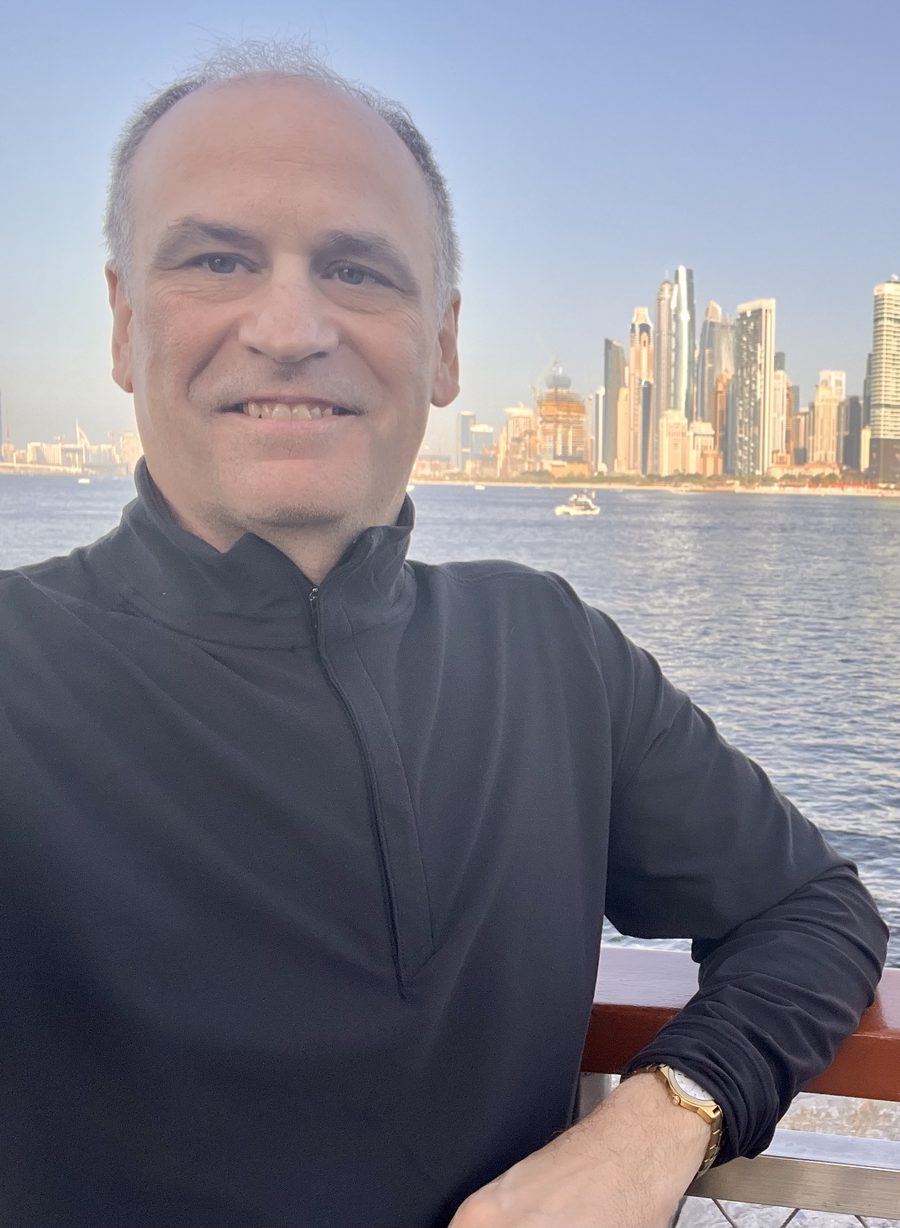
My work reaches beyond the U.S. I have engagements and active interest across the Gulf — where I've recently been building new relationships and partnerships — and ties to entrepreneurship and education programs from Central Asia to the former Soviet Union. I think a good deal about how regulation, and cooperation more broadly, can build bridges between countries rather than friction. This page is the person behind the practice — what I do, what I've written, and what I'm working toward.
MIM, Thunderbird School of Global Management · MBA, W. P. Carey · Arizona State · B.A. International Relations, University of Minnesota
About
For as long as I can remember, I've made the same bet: that cooperation tends to outperform zero-sum competition, and that the largest problems we face — in security, health, technology, and the environment — get solved by working across borders and taking the best ideas from partners wherever they happen to be. I call it Mutually Assured Prosperity, a deliberate inversion of the Cold War's mutually-assured destruction. Long before I had a name for it, I was living it.
I've worked across more worlds than a single résumé captures, and the instincts showed up early. In grade school, before our district had an ESL program, my teachers asked me to befriend the new kids from Korea and China — and I taught myself enough Korean to read and write it, which I still can. As a teenager I started and ran a real video-production company, filming college hockey and weddings most weekends before I was old enough to drive myself there; one of my pieces eventually aired on ESPN. And before I was a regulatory advisor, I was a firefighter, where the instinct turned out to be the same one regulation rewards: read the situation fast, act on what matters, and stay steady where the stakes are real.
In the 1990s I spent years in Russia, building businesses in the heart of Siberia in the turbulent period after the Soviet collapse — including one of the first supermarkets in the region. That work was cross-border problem-solving in its purest form: bringing proven practices somewhere they hadn't reached yet. It also gave me a family, near-native Russian, and a lasting conviction that ordinary people on opposite sides of a divide have far more in common than their governments suggest. I've carried that into decades of citizen diplomacy — work I continue today on the board of a nonprofit devoted to it — an industry advisory role for the commercialization program at AlmaU in Kazakhstan, and, more recently, new relationships and partnerships across the Gulf.
What ties it together is a way of seeing. At a biomimetics conference last year, a speaker put it plainly: nature doesn't care what you say or think — only what you do. That's the test I hold myself to. Most problems hold more room for mutual gain than the loudest voices assume, and you prove it by building something, not by declaring it. My work — reading complex rules, building the evidence, finding the workable path — is the professional expression of that same belief: find the win-win where it genuinely exists, and stay clear-eyed about the lines that aren't negotiable. This is the short version; there's a longer story behind each thread, and I'll tell more of it over time.
Practice
The firm itself — services, engagement models, and the full body of work — lives at iotaintel.com.
Selected Filings
A comment grounded in global FHIR-adoption evidence and a voluntary industry pledge — pairing U.S. rulemaking with international benchmarking.
A fully sourced comment on the agency's draft CCL 6 — a 34-footnote evidentiary framework, framed for durability in the post–Loper Bright environment.
A close legal read of a proposed pesticide-tolerance rule — tested against the FFDCA standard, the agency's duty to respond to significant comments, and the narrowed deference landscape after Loper Bright.
Lines of Inquiry
A deliberate inversion of mutually-assured-destruction logic: the idea that nations, like parties to a rule, often have more room for mutual creation than the loudest players assume — and that good policy can build cooperation rather than friction.
Living among researchers in Akademgorodok, the Siberian science city, left me with a lasting respect for what rigorous science can do — and a conviction that the hardest problems, from waste and energy to health and the environment, get solved faster when good ideas cross borders. Circular-economy approaches like insect-based bioconversion of organic waste are one example I follow closely. These are areas of genuine interest and exploration, not finished ventures.
Two threads that connect my regulatory work to bigger questions: the durability of drinking-water protections, and what America's health spending reveals about where regulation helps and where it doesn't — a bridge, too, to healthcare collaboration prospects in the Gulf.
Contact
Whether you're a client navigating a consequential rule, a collaborator on one of the ideas above, or simply curious — I'd welcome the conversation.